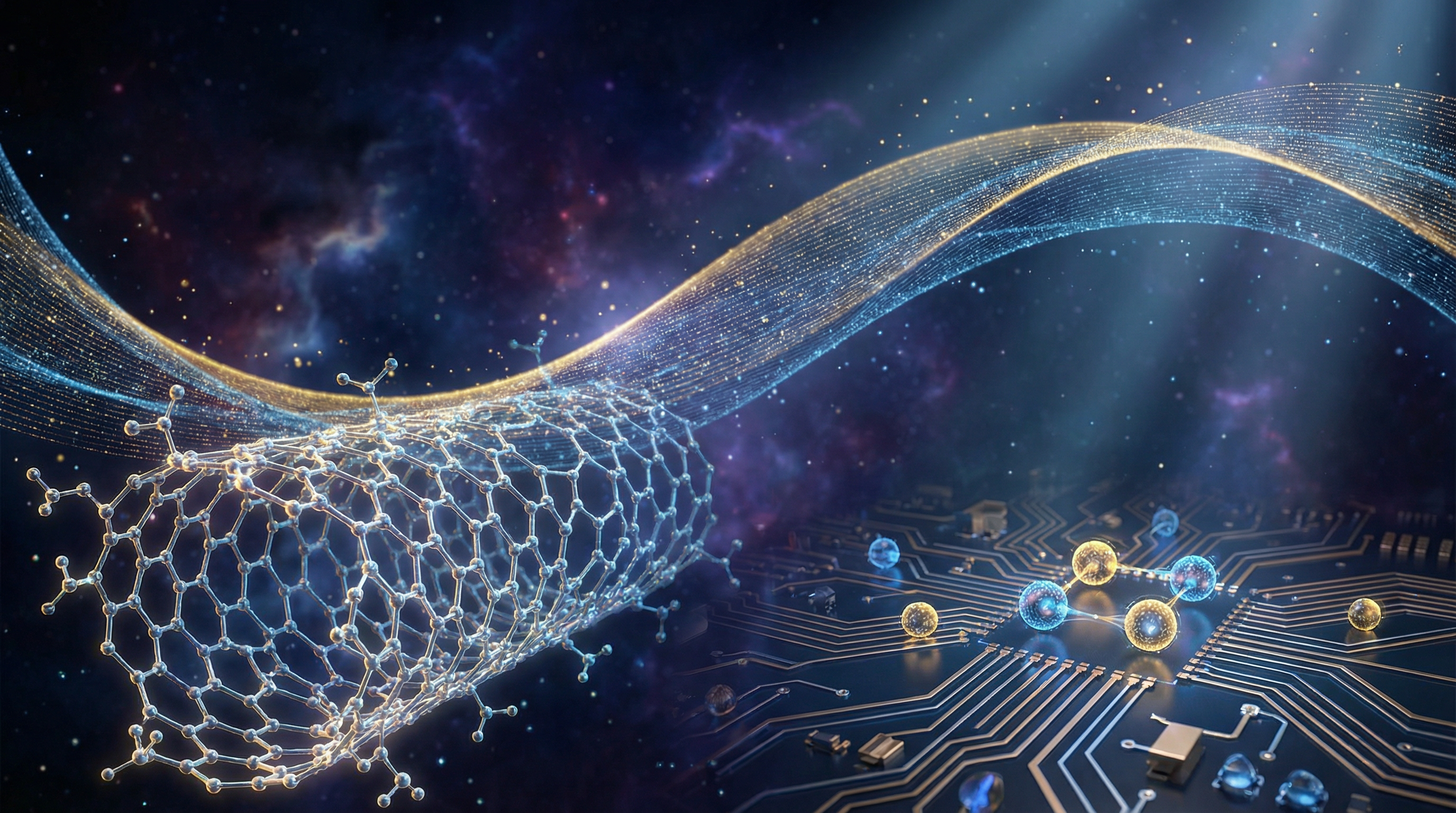
"How did you transition from engineering (Chemical and Material Science) to AI?" This question often comes up when I share my journey. Let me take you back to where it all began. My career path has always been fueled by a deep sense of curiosity — a need to understand how things work, to peel back the layers and see what lies beneath. This curiosity led me to grad school, where I studied computational material science, specializing in the fascinating world of nanotechnology.
As I delved deeper into nanotechnology, my academic foundation, rooted in quantum physics, exposed me to a world where the smallest elements govern the largest outcomes. I explored reality at the atomic level, where the rules of classical physics give way to the intricate world of quantum mechanics. To predict these atomic interactions, I leveraged high-performance computing to simulate and predict atomic behavior. In this realm, computational power and algorithms weren't just tools — they were the very lens through which I viewed and manipulated reality.
Surprisingly, the leap from nanotechnology to AI wasn't as big as you might think. Both fields share a core similarity: using immense computational power and sophisticated algorithms to create something new. In nanotechnology, we designed novel materials with specific properties. In AI, we develop intelligent systems capable of learning and decision-making.
Standing at the intersection of nanotechnology, quantum physics, and AI, I am amazed by the journey that brought me here. This path has given me a unique view on how algorithms, coupled with computational power, can reshape our world. Nowhere is this power more evident than in the rapidly evolving field of quantum computing.
Quantum Computing: The Industrial Revolution 4.0
Quantum computing is not just another technological advancement — it is the driving force behind what many are calling the Fourth Industrial Revolution. By fundamentally altering how we process information, quantum computing is poised to reshape entire industries, driving innovation at an unprecedented pace.
In the pharmaceutical industry, quantum computing is a game-changer. Traditional drug discovery is notoriously slow and expensive, often taking over a decade and billions of dollars to bring a new drug to market. Quantum computers, like those developed by IBM and Google, promise to simulate molecular interactions at an unprecedented scale and speed.
My background in high-performance computing for molecular simulations gives me insight into the immense computational power needed for these intricate processes. The jump to quantum computing, combined with capabilities of HPC centers like the Texas Advanced Computing Center (TACC), could dramatically speed up new treatment development. We are looking at a future where we might develop vaccines for new pandemics in weeks rather than years, and create targeted cancer treatments tailored to specific genetic makeups.
As we tackle climate change, quantum computing emerges as a beacon of hope for the energy sector. By enabling precise modeling of complex systems, quantum computers could revolutionize how we generate, store, and distribute energy. Traditional methods of material discovery are time-consuming and costly, often relying on trial and error. With quantum computing, we can explore material behavior at the atomic level with unprecedented accuracy, potentially leading to breakthroughs in battery technology and renewable energy sources.
The automotive industry stands on the brink of a quantum leap. Quantum computing promises to revolutionize everything from vehicle design to traffic management. The most transformative impact may be in the development of autonomous vehicles — quantum algorithms could significantly enhance the decision-making capabilities of self-driving cars, processing vast amounts of sensor data in real-time far more efficiently than today's systems.
In the world of finance, quantum computing is set to be a game-changer. From portfolio optimization to risk analysis and fraud detection, the ability to process vast amounts of data and run complex simulations in real-time could revolutionize money management. Microsoft's Azure Quantum platform is already laying the groundwork for making these capabilities accessible to financial institutions worldwide.
So, how can you prepare for this quantum future? Here are a few actionable steps:
- Stay informed: Keep up with the latest developments in quantum computing and follow reputable science and technology news sources.
- Explore potential applications: Think about how quantum computing could impact your industry or field of interest.
- Invest in education: Consider taking online courses or attending workshops on quantum computing.
- Foster interdisciplinary thinking: Quantum computing sits at the intersection of physics, computer science, mathematics, and engineering.
- Engage in ethical discussions: As with any powerful new technology, quantum computing raises important ethical questions about its potential impacts on society, privacy, and security.
Embracing the Quantum Revolution
The quantum computing revolution is just beginning, and its full impact is yet to be realized. However, one thing is clear: quantum computing has the potential to reshape industries, solve previously intractable problems, and open up new frontiers of innovation.
From my journey that began in nanotechnology and led me to AI, I've seen firsthand how computational advances can transform scientific discovery. Now, with quantum computing, we're poised for an even greater leap. The future isn't just something that happens to us — it's something we create. And with quantum computing, we have a powerful new tool to shape that future. Are you ready to be part of it?